Parkinson's Disease
Parkinson’s disease (PD) is a progressive neurological condition that affects movement and many other aspects of health. It develops as nerve cells in the brain become damaged or die, including cells that produce dopamine, a chemical messenger that helps coordinate smooth, controlled movements. As dopamine levels decline, everyday activities such as walking, getting dressed, and writing may become more difficult.
Parkinson’s usually develops gradually. Early changes may be subtle, such as shaking in one hand, smaller handwriting, or less arm movement while walking. Symptoms and the rate of progression vary from person to person. The condition can also affect sleep, mood, digestion, and thinking.
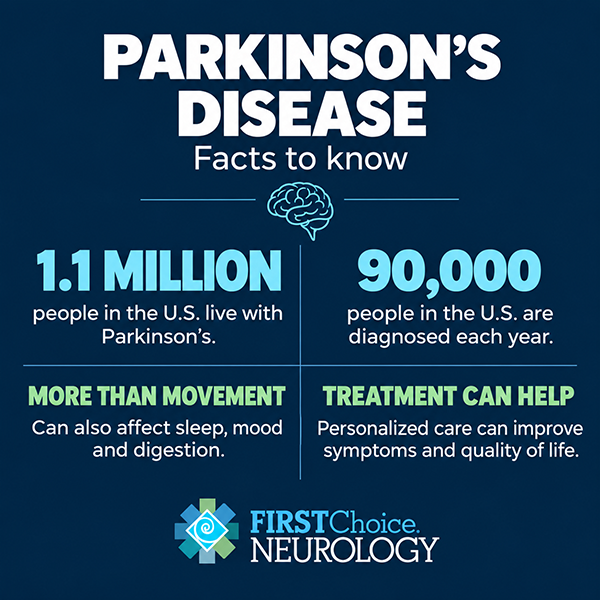
An estimated 1.1 million people in the United States are living with Parkinson’s disease, and nearly 90,000 people are diagnosed each year. Parkinson’s is the second most common neurodegenerative disease after Alzheimer’s disease.
The risk increases with age, but Parkinson’s can also affect younger adults. Approximately 4% of people with PD are diagnosed before age 50, often referred to as young-onset Parkinson’s disease. Men are approximately 1.5 times more likely to develop Parkinson’s than women.
What Causes Parkinson’s Disease?
For most people, the exact cause is unknown. Researchers believe Parkinson’s develops through a combination of genetic susceptibility, aging, and environmental factors. Certain genetic changes and exposures, including some pesticides, have been associated with increased risk. Having a close relative with Parkinson’s may increase a person’s risk, but a family history does not mean someone will develop the disease.
Parkinson’s Symptoms
Parkinson’s can cause both movement symptoms and nonmovement symptoms. Not everyone experiences the same combination.
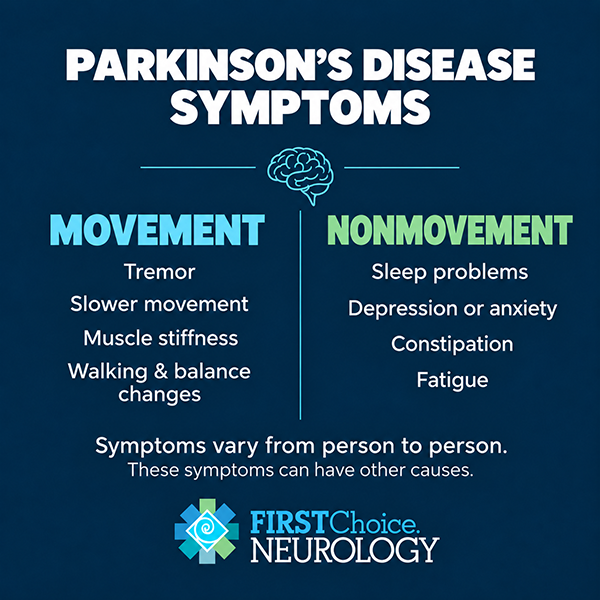 Movement symptoms may include:
• Tremor: Shaking in a hand, finger, foot, or jaw, often most noticeable at rest.
• Slower movement: Taking longer to walk, dress, or complete routine tasks.
• Muscle stiffness: Tightness that can limit movement or cause discomfort.
• Walking and balance changes: Shorter steps, reduced arm swing, a stooped posture, or difficulty turning.
• Speech and handwriting changes: A softer voice or smaller, more crowded writing.
Nonmovement symptoms may include:
• Reduced sense of smell
• Constipation
• Depression or anxiety
• Sleep problems, including acting out dreams
• Fatigue
• Lightheadedness when standing
• Urinary problems
• Changes in memory, attention, or thinking
Some nonmovement symptoms can appear before noticeable movement changes. However, these symptoms have many possible causes and do not, by themselves, establish a Parkinson’s diagnosis.
How Is Parkinson’s Disease Diagnosed?
Parkinson’s is primarily a clinical diagnosis, based on medical history, symptoms, and a neurological examination. A neurologist evaluates movement speed, muscle stiffness, tremor, walking, and balance. Doctors do not need to see all four classic movement symptoms before making a diagnosis.
There is no single routine blood test or scan that can independently confirm Parkinson’s. However, testing can help clarify the diagnosis or rule out other conditions. A DaTscan may support the evaluation in selected cases, while a skin biopsy that detects abnormal alpha-synuclein, a protein associated with Parkinson’s and related disorders, may provide additional information. Neither test can reliably distinguish Parkinson’s from every related condition on its own.
A movement disorders specialist, a neurologist with additional training in Parkinson’s and similar conditions, may be helpful when the diagnosis is uncertain or treatment needs become more complex.
When Should You See a Neurologist?
Schedule an evaluation if you notice persistent shaking, slower movement, stiffness, or changes in walking. These symptoms deserve medical attention, even when they seem mild. An accurate diagnosis can help identify the cause and guide an appropriate treatment plan.
Facts about Parkinson's Disease
Parkinson’s affects more than movement. It can also cause changes in sleep, mood, digestion, memory, and thinking.
Symptoms develop differently for each person. They often begin gradually on one side of the body, and not everyone develops a noticeable tremor.
Parkinson’s is more common in men. Men are approximately 1.5 times more likely to develop the disease than women.
Younger adults can develop Parkinson’s. Although risk increases with age, approximately 4% of people with PD are diagnosed before age 50.
Most cases have no single known cause. Genetic and environmental factors may contribute, but many people with Parkinson’s have no family history.
Diagnosis requires a clinical evaluation. Neurologists assess symptoms, medical history, and examination findings. Certain tests may support the diagnosis, but no single routine blood test or scan can independently confirm it.
Treatment can improve quality of life. Medications, rehabilitation, exercise, and, for selected patients, surgical treatments can help manage symptoms, although there is currently no cure.
Parkinson’s Treatment and Ongoing Care
Although Parkinson’s disease currently has no cure, treatment can help manage symptoms, support independence, and improve quality of life. Care should address movement difficulties as well as sleep, mood, and other nonmovement concerns.
A personalized treatment plan may include:
• Prescription medications: Carbidopa/levodopa and other medications can help reduce movement symptoms.
• Physical and occupational therapy: Rehabilitation can support walking, balance, and everyday activities.
• Speech and swallowing therapy: Treatment can address communication and swallowing difficulties.
• Regular exercise: Activities adapted to a person’s abilities can help maintain strength, mobility, and balance.
• Deep brain stimulation (DBS): For selected patients, this surgical treatment can reduce certain movement symptoms when medication alone does not provide adequate control.
If you or a loved one is suffering from Parkinson's disease, contact a Neurologist at First Choice Neurology today. We have several locations throughout Florida.
Deep Brain Stimulation (DBS)
Deep brain stimulation (DBS) is a surgical treatment that can help selected people with Parkinson’s disease manage tremor, stiffness, slowed movement, and involuntary movements called dyskinesia. It may be considered when medications do not adequately control symptoms or when their benefits fluctuate throughout the day. DBS does not cure Parkinson’s or stop its progression.
During surgery, a neurosurgeon uses brain imaging to guide thin wires, called leads, into specific areas of the brain involved in movement control. The leads connect to a small, battery-powered device called a pulse generator, usually implanted under the skin near the collarbone. Connecting wires run beneath the skin. The device delivers electrical pulses that help regulate abnormal brain activity.
DBS surgery may be performed while the patient is awake for part of the procedure or asleep under general anesthesia, depending on the surgical approach and individual needs. Implantation may take place during one operation or in separate stages, and the procedure’s length varies.
Improvement is not necessarily immediate. The device is usually activated and programmed a few weeks after surgery. Follow-up appointments allow the care team to adjust stimulation and medications, and finding the most effective settings may take several months. Some patients can reduce their medication doses, but this varies.
Newer technology includes adaptive DBS, available with certain systems, which can automatically adjust stimulation in response to recorded brain signals within settings established by the care team. This offers another way to personalize treatment for eligible patients.
A thorough evaluation helps determine whether DBS is appropriate. Benefits depend on the symptoms being treated, and some problems with balance, speech, swallowing, or thinking may not improve. Because DBS involves brain surgery, potential risks include bleeding, infection, and changes in speech, balance, or mood. A movement disorders specialist and neurosurgical team can explain the expected benefits and risks for each patient.
Frequently Asked Questions About Parkinson’s Disease
What is Parkinson’s disease?
Parkinson’s disease (PD) is a progressive neurological condition that affects movement and other body functions. It involves the loss of brain cells that produce dopamine, a chemical messenger that helps coordinate movement. Symptoms develop gradually and vary from person to person.
What are the early signs of Parkinson’s?
Early signs may include a tremor at rest, slower movement, muscle stiffness, smaller handwriting, a softer voice, or reduced arm swing when walking. Constipation, reduced sense of smell, and sleep changes may also occur. These symptoms can have other causes, so a medical evaluation is important.
Does everyone with Parkinson’s have tremors?
No. Some people have little or no noticeable tremor. Slowed movement, stiffness, or changes in walking may be more prominent. A tremor alone also does not necessarily mean someone has Parkinson’s disease.
How is Parkinson’s disease diagnosed?
A neurologist reviews your symptoms and medical history and performs a neurological examination. No single routine blood test or brain scan can independently confirm Parkinson’s. Tests such as MRI, DaTscan, or, in selected cases, a skin biopsy may help clarify the diagnosis or evaluate other possible causes.
Is Parkinson’s disease hereditary?
Most people with Parkinson’s do not have a clear inherited cause. Certain genetic changes can increase risk, but researchers believe that aging, genetic susceptibility, and environmental factors often interact. Your neurologist may discuss genetic counseling or testing based on your age at diagnosis and family history.
Is there a cure for Parkinson’s disease?
There is currently no cure. However, medications, exercise, rehabilitation, and selected surgical treatments can help manage symptoms and support independence. Treatment plans should address movement symptoms as well as concerns such as sleep difficulties, constipation, depression, and anxiety.
What medications treat Parkinson’s?
Carbidopa/levodopa is a commonly used and highly effective treatment for movement symptoms. Other medications may help dopamine work longer, mimic its effects, or address specific symptoms. Your neurologist selects treatment based on your symptoms, daily activities, other health conditions, and potential side effects. Medications help control symptoms but do not stop the disease’s progression.
When is deep brain stimulation considered?
Deep brain stimulation (DBS) may help selected patients whose movement symptoms fluctuate despite medication or who have troublesome tremor or dyskinesia. It uses an implanted device to deliver electrical stimulation to areas of the brain involved in movement. DBS requires careful evaluation and ongoing programming; it does not cure Parkinson’s or treat every symptom.
Can exercise help people with Parkinson’s?
Yes. Regular exercise can improve mobility, strength, flexibility, and balance. It may also help mood and daily functioning. A physical therapist or healthcare professional can recommend activities suited to your abilities and fall risk. Exercise is an important part of care alongside prescribed treatment.
When should I see a neurologist?
Schedule an evaluation for persistent tremor, slower movement, stiffness, or changes in walking, handwriting, or speech. A movement disorders specialist can provide additional expertise when the diagnosis is uncertain, or symptoms become more difficult to manage. Seeking evaluation early helps identify the cause and establish an appropriate care plan.